
Digital Twins in Maintenance

Industrial organizations today operate increasingly complex assets. Modern production facilities, energy infrastructure, and manufacturing systems generate enormous volumes of operational data. Yet even with this data, maintenance teams often struggle to fully understand how assets behave over time and under different operating conditions.
This is where Digital Twin technology is beginning to reshape maintenance and asset management.
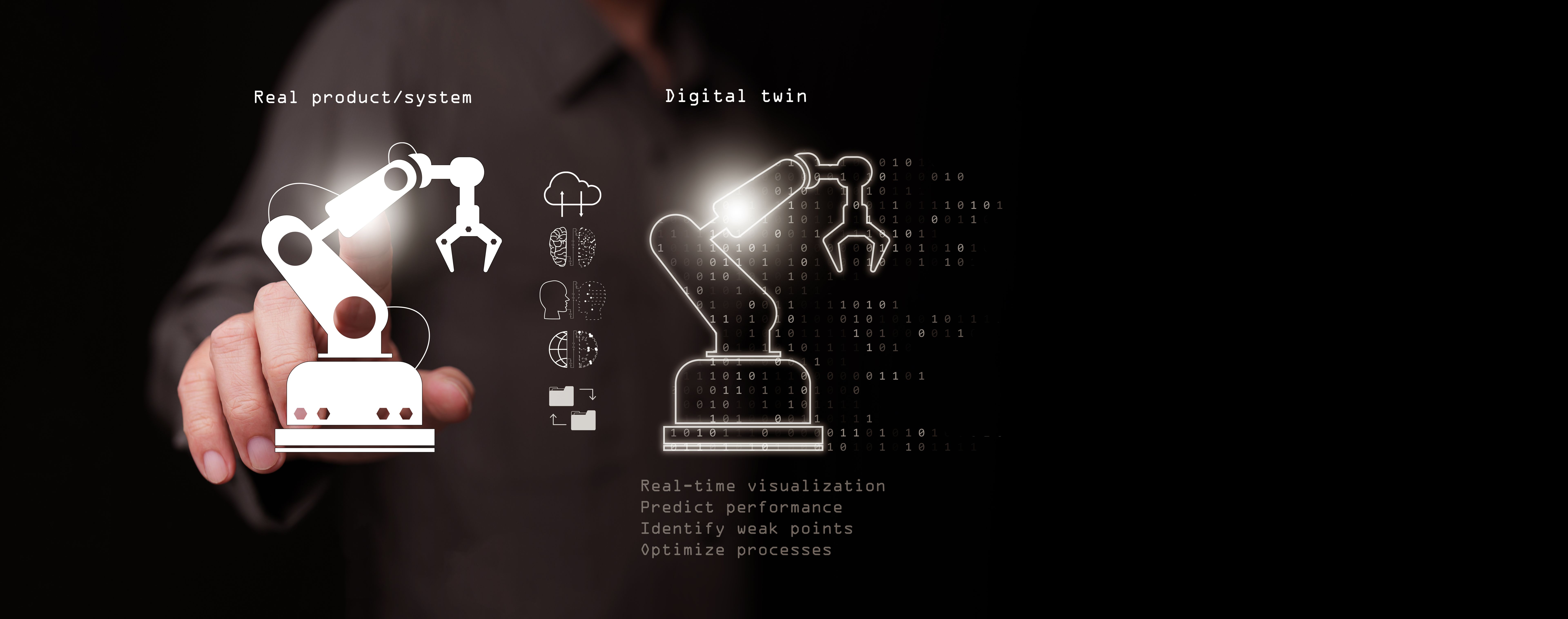
A digital twin is a virtual representation of a physical asset or system, continuously updated with real-time data from sensors, operational systems, and historical records. By combining physical asset data with advanced analytics and simulation models, digital twins allow organizations to monitor performance, analyze behavior, and predict future outcomes.
In essence, a digital twin creates a living digital model of an asset—allowing engineers and maintenance teams to observe, analyze, and optimize equipment performance without directly interacting with the physical asset itself.
Understanding Digital Twins
The concept of the digital twin originated in product lifecycle management and engineering simulation. Over time, advances in connectivity, sensors, and computing power have enabled digital twins to become dynamic, real-time representations of operating equipment.
A typical digital twin integrates several key elements:
- Sensor data capturing real-time asset condition and operational parameters
- Engineering models representing the design and performance characteristics of the asset
- Historical maintenance and reliability data
- Advanced analytics and simulation capabilities
By combining these elements, the digital twin mirrors the behavior of the physical asset.
This capability allows organizations to test scenarios, analyze failure mechanisms, and evaluate maintenance strategies within the virtual environment before implementing changes in the real world.
According to research from the McKinsey Global Institute, digital technologies that combine operational data and advanced analytics can significantly improve asset productivity and reliability (Manyika et al., 2011).
Applications in Maintenance and Reliability
Digital twins offer several powerful applications for maintenance and reliability management.
Predictive maintenance
One of the most significant advantages of digital twins is their ability to support predictive maintenance strategies. By analyzing real-time operational data alongside historical performance trends, digital twins can identify early indicators of equipment degradation.
This allows maintenance teams to anticipate potential failures and schedule interventions before equipment breakdown occurs.
Failure analysis and troubleshooting
Digital twins also provide valuable insight when investigating equipment problems. Engineers can analyze operating conditions, review historical data, and simulate potential failure scenarios within the digital environment.
This capability often accelerates root cause analysis and improves the quality of reliability investigations.
Maintenance strategy optimization
Maintenance strategies such as preventive maintenance intervals or inspection schedules can be evaluated using the digital twin model. By simulating different operating conditions, organizations can determine the most effective maintenance approach without exposing the physical asset to risk.
Improving Asset Lifecycle Management
Beyond day-to-day maintenance decisions, digital twins can also support long-term asset lifecycle management.
Because digital twins integrate engineering design data with operational performance information, they provide a comprehensive view of how assets behave over their entire lifecycle.
This insight allows organizations to evaluate questions such as:
- How operating conditions influence equipment degradation
- Which maintenance strategies deliver the greatest reliability improvements
- When asset refurbishment or replacement may be required
Standards such as ISO 55000 emphasize the importance of managing assets throughout their lifecycle to maximize value and minimize risk (ISO, 2014). Digital twin technology supports this objective by providing a continuous flow of performance data that informs strategic asset management decisions.

Challenges and Implementation Considerations
Despite their potential, digital twins are still an emerging technology in many industries. Implementing digital twin solutions requires several important foundations.
Reliable data infrastructure
Digital twins depend heavily on accurate and consistent data from sensors, monitoring systems, and maintenance records. Poor data quality can significantly limit the effectiveness of digital twin models.
Integration of multiple systems
A successful digital twin typically integrates information from several sources, including operational technology systems, maintenance management systems, and engineering databases.
Achieving this level of integration can require significant technical coordination.
Organizational capabilities
Finally, organizations must develop the analytical skills required to interpret digital twin insights and translate them into practical maintenance actions.
Technology alone cannot improve reliability. The greatest value comes when digital tools are combined with strong engineering expertise and effective maintenance processes.
As Davenport and Harris observe, organizations that successfully integrate analytics into operational decision-making consistently outperform those that rely primarily on intuition (Davenport & Harris, 2017).
The Future of Digital Twins in Maintenance
As sensor networks expand and data analytics technologies continue to advance, digital twins are likely to play an increasingly important role in maintenance and reliability management.
In the future, digital twins may allow maintenance teams to monitor entire asset systems in real time, simulate operational scenarios, and optimize maintenance strategies continuously.
When integrated with artificial intelligence and predictive analytics, digital twins could ultimately enable fully data-driven maintenance ecosystems, where maintenance decisions are supported by continuous analysis of asset behavior.
For organizations seeking to improve reliability, reduce downtime, and optimize asset performance, digital twin technology represents a powerful step toward the next generation of maintenance management.

💬 Discussion
How familiar is your organization with digital twin technology?
Consider the following questions:
- Has your organization explored or implemented digital twin solutions for critical assets?
- What types of equipment or systems would benefit most from digital twin modeling in your operations?
- What challenges have you encountered when integrating operational data with digital models?
- Do you see digital twins becoming a standard tool for maintenance and reliability teams in the future?
Share your experience in the comments.
What opportunities—or barriers—do you see when applying digital twin technology in maintenance environments?

This article is part of a series exploring how data, digital technologies, and advanced analytics are reshaping modern maintenance and reliability management.
Next in the series: The Role of AI in Maintenance Management, examining how artificial intelligence is enabling predictive insights and smarter maintenance decisions.
References
Davenport, T. H. and Harris, J. G. (2017) Competing on Analytics: The New Science of Winning. Boston: Harvard Business Review Press.
ISO (2014) ISO 55000: Asset Management – Overview, Principles and Terminology. Geneva: International Organization for Standardization.
Manyika, J., Chui, M., Brown, B., Bughin, J., Dobbs, R., Roxburgh, C. and Hung Byers, A. (2011) Big Data: The Next Frontier for Innovation, Competition, and Productivity. McKinsey Global Institute.